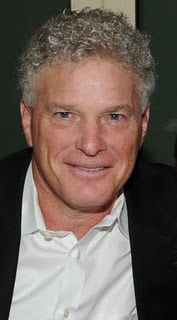
Retocada.jpeg Welcome to ILN-terviews, a series of profiles of ILN member firm attorneys, designed to give a unique insight into the lawyers who make up our Network.

For our latest interview, we chose ILN member, Gustavo de Jesus of Richards, Cardinal, Tutzer, Zabala & Zaefferer in Buenos Aires, Argentina.

In one sentence, how would you describe your practice?
Mainly assisting clients in their day-to-day operations in commercial matters (corporate, contracts, etc.) and working on mergers & acquisitions of companies.

Who would be your typical client?
Big and mid-size multinational companies.

What would you like clients and potential clients to know about you?
That I always do my best to render first class service at a reasonable price.

What has been your most challenging case? Why?
There have been many challenging cases. It is difficult to pick one.

What has been your proudest moment as a lawyer?
I always feel proud when I see that the client’s interests have been protected and when the client recognizes my work.

What do you do when you’re not practicing law?
Playing sports and spending time with my family.

What would surprise people most about you?
Perhaps that I am not as serious as I look.

What has been your most memorable ILN experience?
I could not pick one isolated experience.  I have always enjoyed the friendship and warm treatment that I receive at all the ILN meetings.

What career would you have chosen if you weren’t a lawyer?
I would have probably chosen architecture.

If a movie were made out of your life, who would you want to play you?
I really cannot imagine somebody playing my life in a movie!! But if I have to say a name, I would pick Robert De Niro.

How would you like to be remembered?
As a good husband and father and basically as a good man.
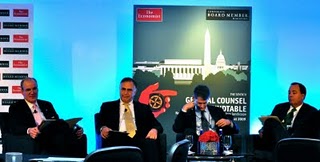
DSC_0023.jpeg The fourth session of the day at The Economist’s 7th General Counsel Conference focused on “The GC, the board and governance issues,” with a panel that included moderator TK Kerstetter, President and Chief Executive Officer of Board Member Inc/Corporate Board Member, Marty Wilczynski, Senior Managing Director at FTI Consulting, Stephen Cutler, Executive Vice-president and General Counsel of JPMorgan Chase, Bruce Vanya, Partner at Katten Muchin Rosenman LLP, and Ed Knight, Executive Vice-president, General Counsel, and Chief Regulatory Officer at NASDAQ OMX.

Kerstetter introduced the panel by saying that there are multiple topics that they could talk about surrounding the issue of governance, but he would start with the SEC.  He said that people thought Mary Shapiro would be just a placeholder, but she’s been upfront, particularly with enforcement.  Cutler, having worked at the SEC in the past, had a unique perspective and wanted to give the audience a sense of where enforcement is going.  First, he said there is a more prosecutorial bent than ever before, because of the personnel makeup.  He said this would change the shape of the SEC and make them more attuned to cooperation, such as rewarding the first person in the door.  He also said it meant they would be rapping people hard and would be less attuned to what securities enforcement defense lawyers have paid attention to for a living.  As a result, there would be more negotiating room around the edges.  Secondly, there will be an emphasis on speed.  Over the last few years, they have let cases drift, tempered by what Judge Rakoff did with the Bank of America case.  Third, there will be more power of and to the staff, which means less checks & balances.  Fourth, there has been a move on the part of the enforcement division to specialize and fifth, there is more of a focus on individuals.  Before, they used to hold companies responsible, but not individuals, which is changing.  Cutler pointed out that the SEC will now see everything they do through the prism of Madoff and Bear Stearns, as well as from an agency that wasn’t sure it would even exist anymore nine months ago.  Wilczynski said that with respect to the current environment, it’s fair to say that they’ll be active in the next few years, but he’s seeing mixed signals.  With the reorganization taking place, slots aren’t being filled aggressively.  So though they’re active, the reorganization is slower than expected and there is an impact offset by the public record.  In the last five years or so, the number of formal orders that the commission issued was about half of the 450 orders that have already been issued in 2009.  It doesn’t feel that busy, but in public, they seem to be fully geared up, while in reality, there are still reorganization issues slowing things down.  2010 will be much busier.

Continue Reading The Economist’s General Counsel Roundtable Session Review: The GC, the board and governance issues

DSC_0020.jpeg After a short networking break, we reconvened at The Economist’s 7th General Counsel Conference for a panel discussion of “The election of directors: Could 2010 be the perfect storm?” The panel included moderator TK Kerstetter, President and Chief Executive Officer of Board Member Inc/Corporate Board Member, Michael McAlevey, Vice-president and Chief Corporate, Securities and Finance Counsel of General Electric, Peggy Foran, Vice-president, Chief Governance Officer, and Corporate Secretary of Prudential Financial, and Shelley Dropkin, General Counsel, Corporate Governance of Citigroup.

Kerstetter asked the panelists to start by commenting on their biggest concerns as the proxy season gets started.  Dropkin said that it’s a combination of losing 452 on directors and majority voting, which could have unintended consequences.  Now there’s a great concentration of institutions, activists and investors in the vote and she’s concerned about the degree to which they’re influenced by proxy advisors.  Dropkin asked how responsible would institutions be in exercising their vote.  She foresees a lot of strange results that could occur and have magnified impact because of the reduction of the retail vote.  McAlevey said that he is concerned about a couple of things.  Tactically, for a company like his, they have a significant retail vote, so this is meaningful and they need to come up with a way to encourage them to vote. They’ll need to look at the discretionary vote and do the math, so that they can see how it will affect them.  He suggested hiring a proxy advisor firm to find new ways to contact and remind people to vote.  His more seismic point was that much attention is focused on giving more weight to shareholders without making adjustments, but the economic crisis in 2008 was also the shareholders responsibility.  The steps being taken may empower shareholders even more and encourage short-term interests.  Foran believes there will be directors who are not elected.  She said that activists kill what is already dead.  Agreeing with the others, she shared that she was afraid of the impact on the boardroom.  They’ll need courageous directors for the future, because those doing the right thing may get voted off.  She feels it will be important for directors to communicate and engage, to tell their story before someone else tells it.

Continue Reading The Economist’s General Counsel Roundtable Session Review: The election of directors: Could 2010 be the perfect storm?

DSC_0019.jpeg The second session of The Economist’s General Counsel Roundtable was a panel on the topic of “Balancing the growth imperative with escalating risk.”  Matthew Bishop, the US Business Editor for The Economist moderated the panel, which included John Lynch, US General Counsel of BP America and Deirdre Stanley, the Executive Vice-president and General Counsel of Thomson Reuters.

Lynch started with his view of the role of the general counsel in risk management, based on his own experience. He feels there’s an element of getting ahead of governance and reporting to the Board, but the role of the GC is different for each company, based on its needs.  The answer to the role of the GC lies with the unique factors of the company, subject to risk, which is a broad topic.  He then defined what he sees as the four different types of risk: compliance risk, legal risk, function risk, and event risk.  Stanley said that at Thomson Reuters, it is lightly regulated, so their strategies and processes aren’t tied up in a lot of regulation.  She sees the role of the GC as risk identification and risk environment identification, which she defined as the point at which they trip up on a new regulation that wasn’t applicable before.  As the Foreign Corrupt Practices Act seeks to become increasingly global, the articulation of risk itself is important, because changing operations increases the risk that they might not have otherwise identified.  Mitigation is the third part of a GC’s responsibilities and requires the close integration of legal with operations.

Bishop then asked, with the push to be more global, how do they help managers to understand how to do business in China, for example.  Lynch answered that they tell them that risk management is what they see in the case law around governance, not what Seth Harris described about deciding whether to comply.  Bishop followed up by asked about the trade-off between growth and risk management.  Lynch agreed that he feels that there is a trade-off, but they’re trying to prevent it at BP.  He said that to grow, they can either access a new country or become more efficient, which is tougher.  To grow, they need to identify the risks, a mitigation plan, and how to fund it.  Stanley said that she doesn’t see it as a trade-off, but as a balance.  As in any business, without risk, there’s no reward.  The challenge is how to grow in a greater risk environment, so she works to instill risk management awareness in managers and encourages leaders to be involved in all incremental changes.  Lynch added that it’s important to have legal and compliance in the same complement as the business is expanding, and not after or towards the end of planning.

Continue Reading The Economist’s General Counsel Roundtable Session Review: Balancing the growth imperative with escalating risk

22538978003a44e2af2cf62baab69024.jpeg
On Tuesday, December 1st, the ILN participated as a marketing partner in The Economist’s 7th General Counsel Roundtable in Washington, DC.  The theme of the conference was “navigating through the new regulatory landscape,” and the morning kicked off with a session with Seth Harris, the Deputy Secretary of the US Department of Labor, entitled “How will the new regulatory environment impact the GC?”

Moderated by Matthew Bishop, the New York Bureau Chief and US Business Editor for The Economist, Harris gave a brief overview of the current unemployment situation and talked about the Recovery Act.  Bishop asked him for his thoughts on the outlook for unemployment, and Harris started by saying that when President Obama took office, 700,000 jobs were being lost a month and the economy was frozen and declining.  Though the US hasn’t dug its way out entirely, there is some improvement, with recent job loss at 180,000 a month.  Jobs lost claims are the lowest they have been since September of 2008 and banks are doing better.  The Administration is working to turn job loss into job creation.  Harris observed that the 2.8% growth in the GDP during the last quarter, which should continue, will likely lead to job growth as well, which generally lags behind by a couple of quarters.  He added that he hopes the workers will see a share of growth next year.  That being said, he cautioned that there will be continuing rates of unemployment for a long time, and that the economy will take a long time to recover.  Though it’s not an utterly jobless recovery, Harris would like to see more growth.

Continue Reading The Economist’s General Counsel Roundtable Session Review: How Will the New Regulatory Environment Impact the GC?

JeffShapiro1.jpegWelcome to ILN-terviews, a series of profiles of ILN member firm attorneys, designed to give a unique insight into the lawyers who make up our Network.

For our latest interview, we chose ILN member, Jeff Shapiro of Arnstein & Lehr in Miami, Florida.

In one sentence, how would you describe your practice?
Multifaceted, with court litigation and arbitration involving diverse areas encompassing commercial disputes, IP and product liability with a focus on medical device and drugs.

Who would be your typical client?
Largely institutional, ranging in size from local companies to Fortune 100.

What would you like clients and potential clients to know about you?
The pursuit of excellence, responsiveness, with a mindset to think outside of the box in conjunction with the control of litigation expenses.

What has been your most challenging case? Why?
Impossible to pick one.

What has been your proudest moment as a lawyer?
There have been many, but if I had to choose one, it would have been a product liability case that was tried, and after my cross examination of the opposing expert was completed, the other side essentially “gave up.” Why? Because it happens too rarely.

What do you do when you’re not practicing law?
Family time and sports.

What would surprise people most about you?
That I’m not nearly as “conservative” as I sometimes seem, including a long history of playing the drums in a rock ‘n roll band.

What has been your most memorable ILN experience?
The ongoing interaction with friends and colleagues from the ILN is what sets it apart.

What career would you have chosen if you weren’t a lawyer?
Educator, sports coach.

If a movie were made out of your life, who would you want to play you?
Meryl Streep, she can play any role.  If not her, Clark Gable.

How would you like to be remembered?
Loving husband and father.

Johan1.jpegWelcome to ILN-terviews, a series of profiles of ILN member firm attorneys, designed to give a unique insight into the lawyers who make up our Network.
For our latest interview, we chose ILN member, Johan Vanden Eynde of Vanden Eynde – Legal in Brussels, Belgium

In one sentence, how would you describe your practice?
That we are a group of lawyers who are proud to assist you when we take your case.

Who would be your typical client?
Essentially, we are acting for private (SME and larger companies) and public (ministries and public commercial companies) clients in the fields of business litigation and consultancy.  We also act for clients in administrative law, such as urban planning, public procurement and competition law. 

What would you like clients and potential clients to know about you?
That we take interest and care in their cases and that we will stand with them through difficulties.  Also, that their case is our challenge. 

What has been your most challenging case? Why?
Some years ago, we assisted a company in a very difficult situation with several procedures before the civil and administrative courts.  There were very important contestations in several fields of law.  Financially, it was a huge business contract for the client.  The firm stood with them during all of the processes, losing four cases in the first instance, but winning on appeal.  You can feel the trust that you build up and the tenacity needed in this profession. 

What has been your proudest moment as a lawyer?
Certainly when I won my first case before the Commission of Human Rights in Strasbourg.

What do you do when you’re not practicing law?
Taking care of my family, trying to fish, reading the philosophers and writing articles and books about law!

What would surprise people most about you?
I don’t know. Probably a lot of things of the common life, like cooking or doing sport.

What has been your most memorable ILN experience?
The repeated warm welcome at each meeting. 

What career would you have chosen if you weren’t a lawyer?
Astronomer.
If a movie were made out of your life, who would you want to play you?
Somebody like Cary Grant.

How would you like to be remembered?
Will there be a remembering?

MARRIOTT_006_2.jpegWelcome to ILN-terviews, a series of profiles of ILN member firm attorneys, designed to give a unique insight into the lawyers who make up our Network.

For our latest interview, we chose ILN member, Bruce Feuchter of Stradling Yocca Carlson & Rauth in Newport Beach, California.

In one sentence, how would you describe your practice?
A flourishing emerging growth corporate securities practice, consisting of start-up to public companies, both medical device and technology companies.

Who would be your typical client?
Venture Capital-backed medical device companies with exciting technologies.

What would you like clients and potential clients to know about you?
I know their market, I understand their needs, and how to solve their problems.  I enjoy working with entrepreneurs.

What has been your most challenging case? Why?
The most challenging transaction that I have ever been the lead attorney for was the acquisition of an aerospace company back in 1991.  The company was into many defense programs, some of which were highly classified. Since they were classified, we could do no due diligence on those programs or even know about them.  An example of such a program was the exhaust system for the Stealth Fighter. The transaction required a layer of venture capital for equity, and three different levels of debt with four different lenders.  It was undertaken during the time of the great downsizing of the aerospace industry in Southern California.  Eleven years later, the business was sold, again a difficult transaction.  The result for the owners was a good return, not a great return. 

What has been your proudest moment as a lawyer?
On January 1, 1985, I became a shareholder in my law firm and on January 21, 1985, I became a father for the first time. What a change in life that time was.

What do you do when you’re not practicing law?
I am only now learning golf, the children are now gone.  I ski a little each year, and I seem to go to a great number of charitable events.

What would surprise people most about you?
That after 30 years in Southern California, my passion is still skiing, not surfing.  I do not do it often, but a little snow cat skiing or a little helicopter skiing can make my year.

What has been your most memorable ILN experience?
I travel and visit members of the ILN in different places in the world; getting to know them fills me with wonder, finding how similar we are and how much we think alike on a number of topics.

What career would you have chosen if you weren’t a lawyer?
A CEO of an energy efficiency company or an alternate energy company.
If a movie were made out of your life, who would you want to play you?
No idea today. Thirty years ago, I would have said Robert Redford and recently, I would have said Harrison Ford.

How would you like to be remembered?
As a person who was interested in so many different things. I like to think of myself as an interested and trusted advisor to many entrepreneurs.

Santiago.jpeg Welcome to ILN-terviews, a series of profiles of ILN member firm attorneys, designed to give a unique insight into the lawyers who make up our Network.

For our latest interview, we chose ILN member, Santiago Mejia Ortiz of Mejia-Armenteros & Abreu in the Dominican Republic.

In one sentence, how would you describe your practice?
As a small “family comprised” law firm trying to position itself internationally without losing the small firm approach.

Who would be your typical client?
Individuals and medium sized companies doing business in the Dominican Republic, although we’ve served big companies as well.

What would you like clients and potential clients to know about you?
That despite being a young lawyer in a young firm, clients can be sure they’ll be getting top class legal services from me and my firm.

What has been your most challenging case? Why?
I think it was representing a big client in a substantial concession contract with a multinational company in a cross border transaction, because I was the counterpart for very experienced and well-known old lawyers, looking down to me because I was younger than all of them.  It was challenging and rewarding at the same time.

What has been your proudest moment as a lawyer?
Every time I make my client feel satisfied with the result of my work.

What do you do when you’re not practicing law?
Mostly, I love spending time with my family and especially with my soon-to-be 5 year old son.  Also, I am an Amateur Radio Operator as well.  Ah, I’ve opened a coffee shop business too!

What would surprise people most about you?
That although I can seem shy sometimes, I tend to have a great sense of humor…(everyone reading this must be thinking “What?! Really?? Wouldn’t think so!”).

What has been your most memorable ILN experience?
Without any doubt, my first meeting in the Bahamas presenting our firm!  And the immediate acceptance and friendship I’ve received from everybody, making me feel welcome right away. Regional and Annual Meetings are such a great experience - in each of them I’ve been given the chance to know great people and really initiate friendships that hopefully will remain. 

What career would you have chosen if you weren’t a lawyer?
Maybe an entrepreneur or an industrial engineer.

If a movie were made out of your life, who would you want to play you?
If it was my call…Al Pacino. But probably the casting crew will pick Jim Carrey.

How would you like to be remembered?
By everybody: as an honest man with a good heart and a good sense of humor. By my family: as a worthy role model.

ScottGuan2.jpeg Welcome to ILN-terviews, a series of profiles of ILN member firm attorneys, designed to give a unique insight into the lawyers who make up our Network.

For our latest interview, we chose ILN member, Scott Guan of Jade & Fountain PRC Lawyers in Shanghai.

In one sentence, how would you describe your practice?
An international practice with a focus on cross-border business transactions.

Who would be your typical client?
International companies and entrepreneurs doing business in China and/or with Chinese partners, and Chinese companies and entrepreneurs doing business outside of China and/or with foreign partners.

What would you like clients and potential clients to know about you?
That I am a devoted transactional lawyer, who is a bi-lingual, bi-legal, and bi-cultural deal maker.

What has been your most challenging case? Why?
To assist foreign clients in understanding and navigating through the legal system and business environment in China.  The fundamentals of business transactions are all similar in different places around the world, but the ways that they are presented and understood can be very different.  A truly effective and efficient legal advisor must be able to thoroughly understand the needs and challenges of their clients and act not only as their legal advisor, but also as their business partner and cultural consultant. 

What has been your proudest moment as a lawyer?
When a deal is closed and a sustainable win-win situation is created.

What do you do when you’re not practicing law?
Playing soccer with friends and now with my 5-year-old son as well.

What would surprise people most about you?
My personal experience of growing up with China in a rather dramatic way…China has changed so rapidly over the past 30 years and so have been our lives.  When I was in high school 20 years ago, I was on a boarding program.  All my expenses at the time paid by my parents were RMB70 (US$11 approximately) per month. Now, an ILN conference can easily cost much more for just 3 or 4 days.

What has been your most memorable ILN experience?
Visiting ILN member firms and making friends around the world.

What career would you have chosen if you weren’t a lawyer?
Part-time professor & freelance literature translator & part-time government think-tank consultant.

If a movie were made out of your life, who would you want to play you?
This person has not been born or made known to me yet.

How would you like to be remembered?
A proud Chinese, where the East meets the West.